
A street painting can hold more than a view of buildings. The direction of the light, the spacing of figures and the edges that remain unresolved all influence how quickly we move through the image. Paris Morning Stroll and Dusk Approaches offer two different ways of looking at that movement.
A place to pause
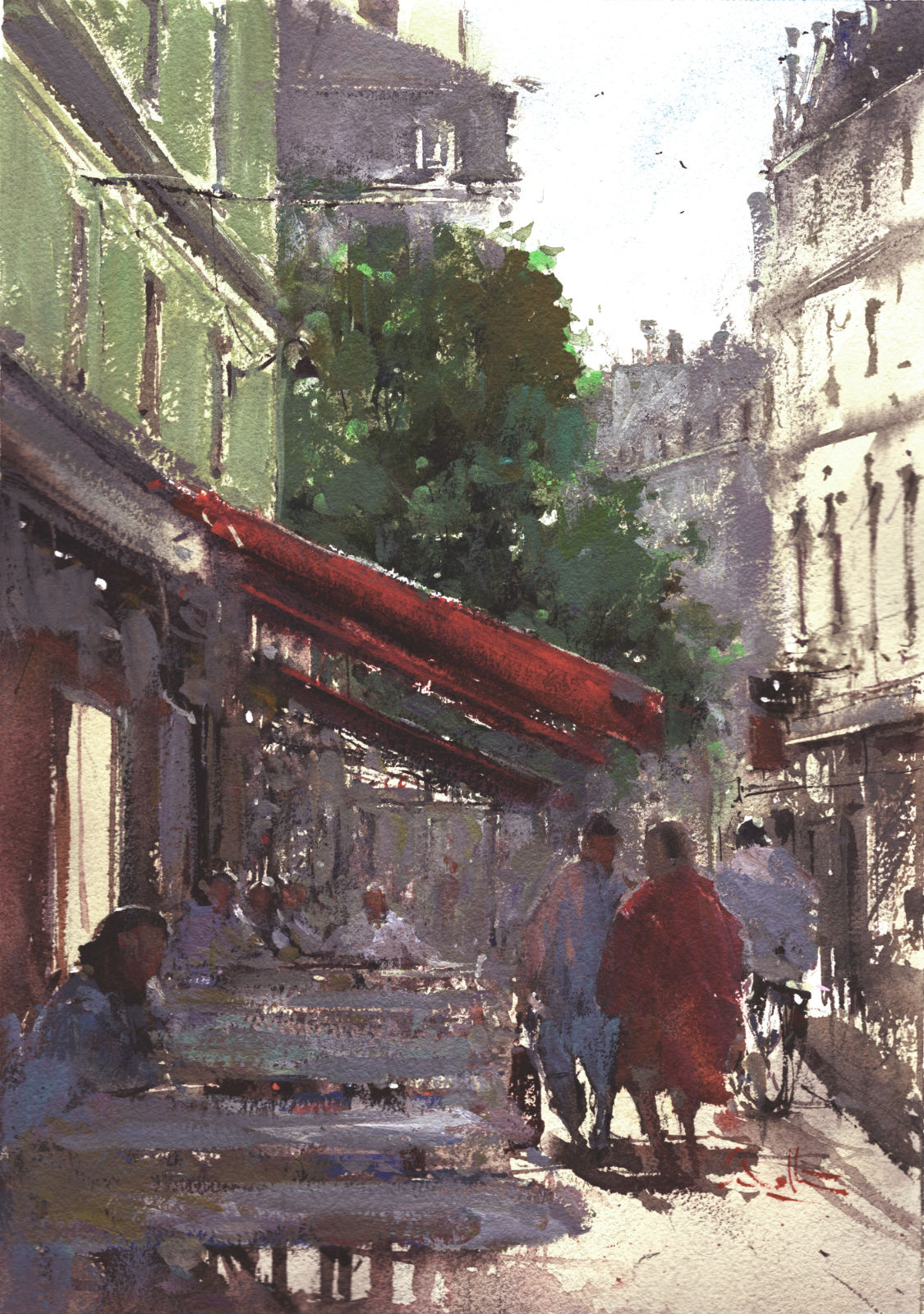
In Paris Morning Stroll, a red awning cuts across the left side of the composition. Tables and chairs give the foreground a human scale, while figures carry the eye towards the brighter street beyond. Green foliage interrupts the hard lines of the buildings. The scene is recognisable without asking every small architectural detail to compete for attention.
Look at the relationship between the awning and the figures beneath it. The red marks act as a visual anchor; the lighter space behind the figures creates a route into the painting. The street feels inhabited because these elements work together, rather than because every person is individually described.
A street held in shadow
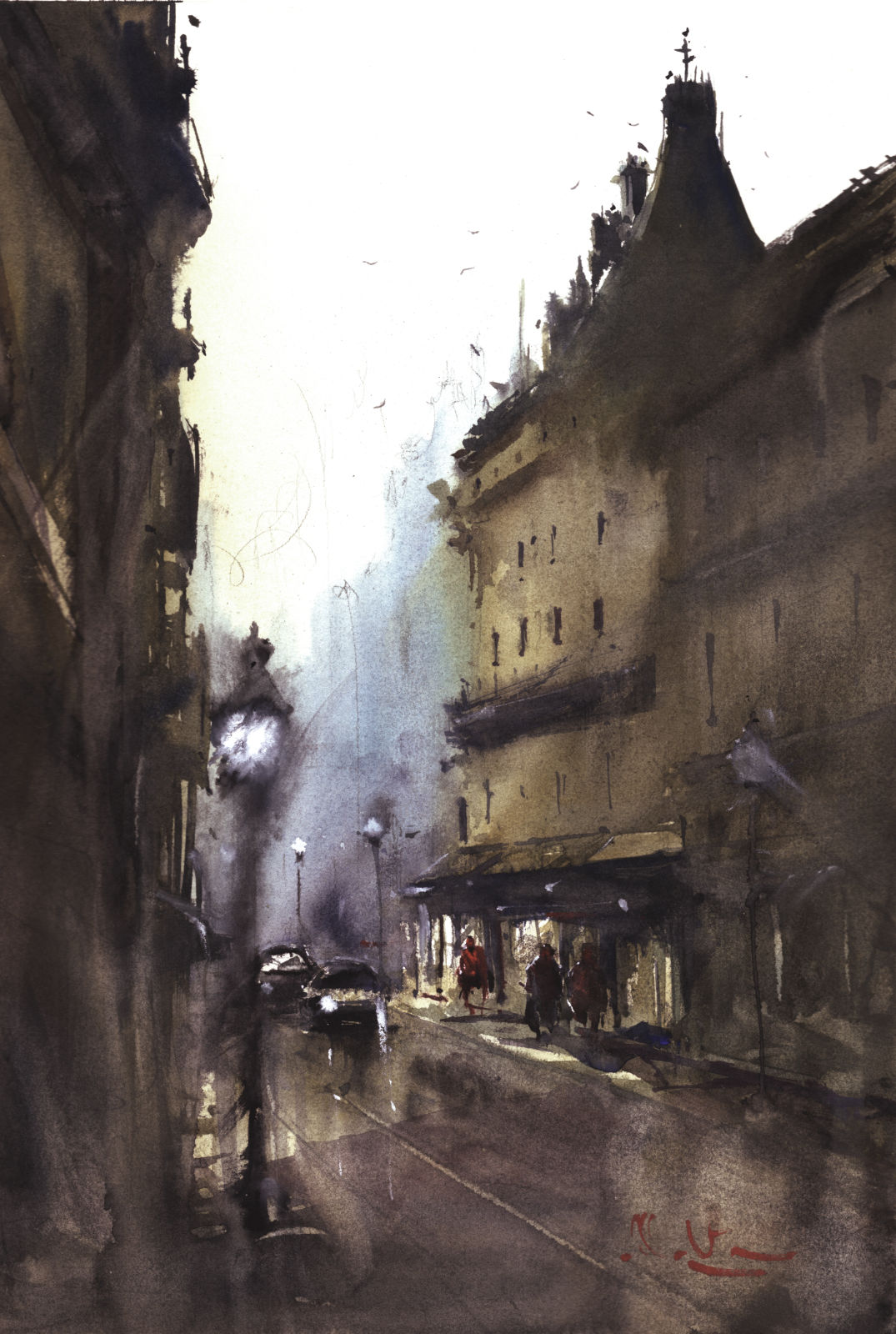
Dusk Approaches uses a narrower, darker passage. Buildings press in on either side, and the pale opening above the street becomes a strong counterpoint to the shadowed foreground. Small figures and lights punctuate the darker areas. Compared with the cafe frontage in Paris Morning Stroll, the eye is drawn more insistently along the street.
Looking at the pair
Seen together, the paintings invite attention to what watercolour can leave open. A loose edge can suggest distance; a concentrated dark can make a nearby wall feel solid. Try looking first at the largest light and dark shapes, then return to the figures. The atmosphere becomes clearer before the smaller details come into focus.
Explore Cities / From Life, browse Available Art, or ask about an artwork. For an enquiry, include the artwork title and your delivery location.