
Urban Mythologies has developed out of two parts of my practice that initially seemed quite separate: painting directly from observation and constructing images from imagination.
For years I have drawn and painted cities from life. Streets, interiors, railway structures, shopfronts, figures and fragments of architecture become a kind of visual vocabulary. When I return to the studio, those observations often begin to shift. A familiar building may become monumental. A street might open onto an impossible landscape. Animals, figures and architectural fragments enter the image without necessarily belonging to a single place or narrative.
That process has gradually become the basis of Urban Mythologies.
I am interested in keeping enough of the observed world for an image to feel familiar, while allowing it to move somewhere less certain. I do not begin with a fully written story. Instead, I tend to construct a scene and allow relationships between the elements to suggest what might have happened before or what could happen next.
This is important to the series. I am less interested in illustration of a fixed narrative than in creating images that feel as though they belong to a larger world.
Watercolour has been particularly useful for this because it allows different kinds of information to coexist. Precise drawing can sit beside areas that are atmospheric, fragmented or unresolved. A building might be carefully constructed while the surrounding sky dissolves into washes and staining. That tension between structure and uncertainty feels appropriate to the work.
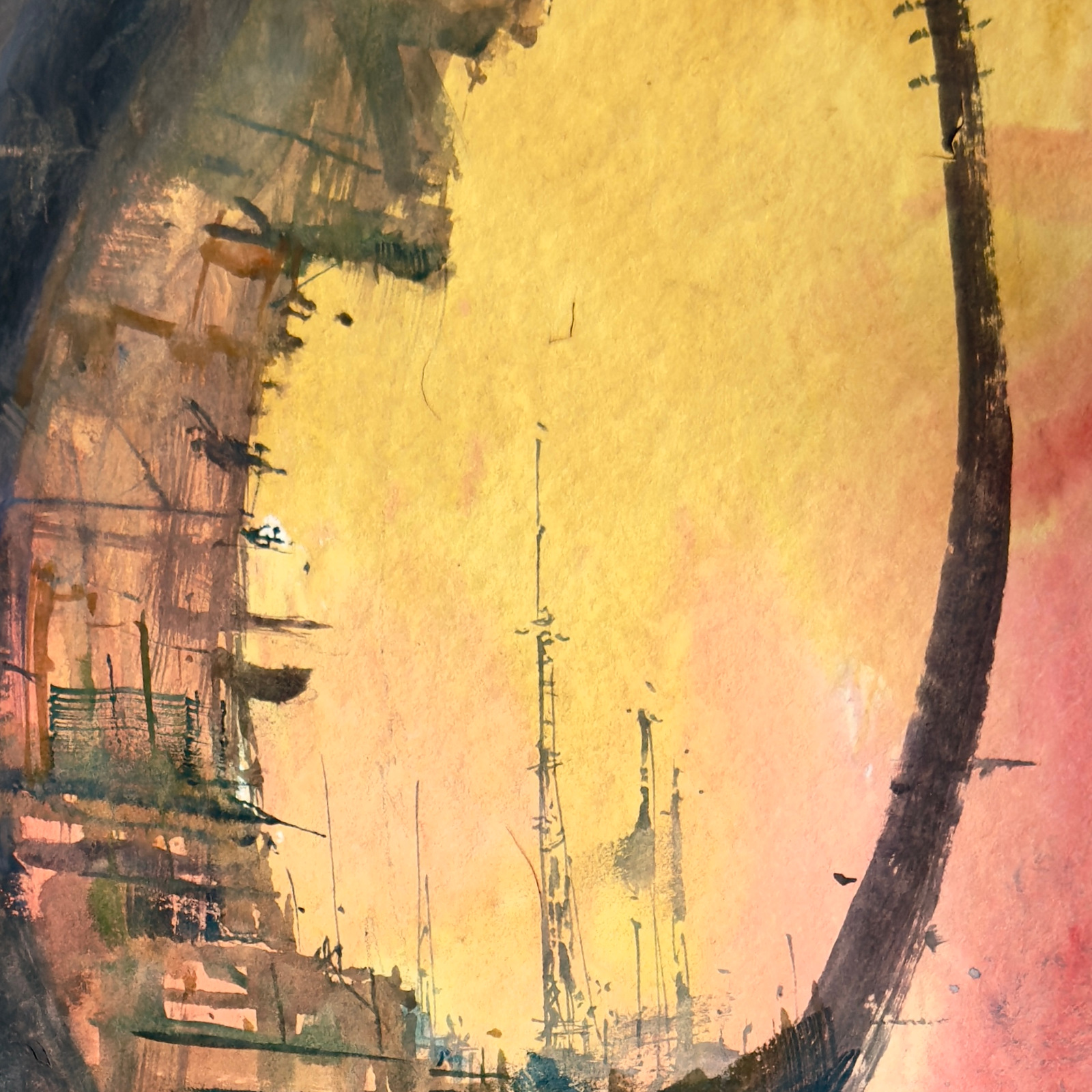
The Sky Foundry — watercolour detail.
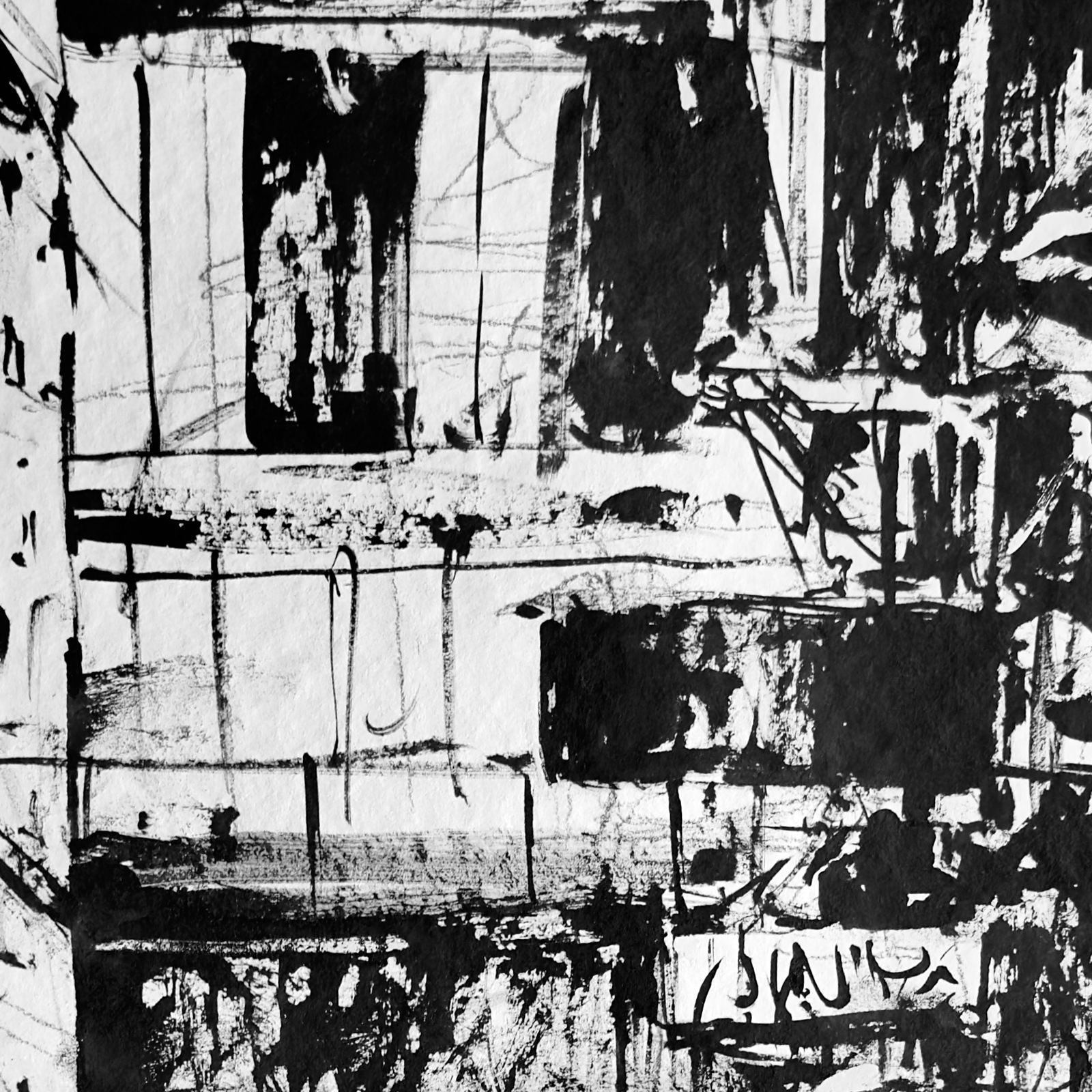
The Long Arcade — watercolour detail.
Recent paintings have also become more interested in scale. Small human figures, elevated structures, industrial forms and distant architecture create environments that feel larger than the individual. At the same time, details such as clothing, vegetation, birds or domestic objects keep the images connected to ordinary experience.
The title Urban Mythologies describes that movement between the everyday and the imagined. Cities already contain layers of memory, history, symbolism and personal association. I am interested in extending those layers rather than inventing a completely separate fantasy world.
The series is continuing across watercolour, ink and oil. Each medium changes the language of the work, but the central question remains similar: how far can an observed place move into imagination while still retaining the feeling of something lived?